
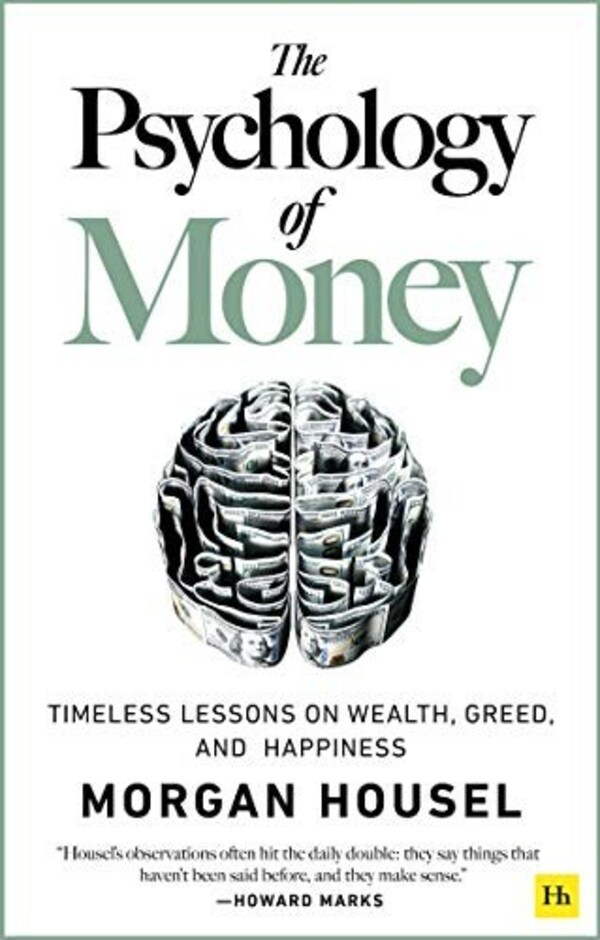
The Psychology of Money
Timeless Lessons on Wealth, Greed, and Happiness
Doing well with money has little to do with how smart you are and a lot to do with how you behave. The highest form of wealth is the ability to wake up and say, ‘I can do whatever I want today.’
Morgan Housel is a former Wall Street Journal columnist and partner at Collaborative Fund. Published in 2020, the book argues that doing well with money is less about intelligence or financial knowledge and more about behavior — nineteen short, independent chapters on the psychological quirks that shape how people save, spend, and invest.
A few lines worth keeping:
Nothing is as good or as bad as it seems.
Luck and risk are both the reality that every outcome in life is guided by forces other than individual effort.
The ability to do what you want, when you want, with who you want, for as long as you want, is priceless. It is the highest dividend money pays.
Money’s greatest intrinsic value — and this can’t be overstated — is its ability to give you control over your time.
Some lessons have to be experienced before they can be understood.
But there’s only one way to stay wealthy: some combination of frugality and paranoia.
Wealth is the nice cars not purchased. The diamonds not bought. The watches not worn, the clothes forgone and the first-class upgrade declined. Wealth is financial assets that haven’t yet been converted into the stuff you see.
Wealth is just the accumulated leftovers after you spend what you take in.
One of the most powerful ways to increase your savings isn’t to raise your income. It’s to raise your humility.
Saving is a hedge against life’s inevitable ability to surprise the hell out of you at the worst possible moment.
True success is exiting some rat race to modulate one’s activities for peace of mind.
History is just one damn thing after another.
Appears in think → forward