
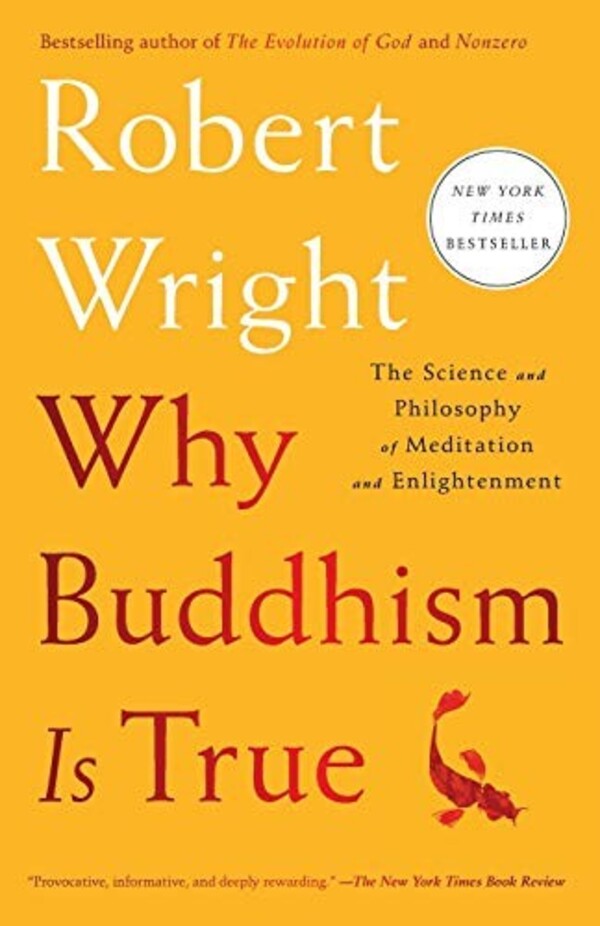
Why Buddhism Is True
The Science and Philosophy of Meditation and Enlightenment
Natural selection built our brains to chase satisfaction that never lasts and to see the world warped in our favor. Buddhism diagnosed this thousands of years ago, and meditation is the tool for seeing through the illusion — becoming both happier and clearer at once.
Robert Wright is a science journalist and author of “The Moral Animal” and “Nonzero.” In this 2017 book he argues, from evolutionary psychology, that core Buddhist claims about suffering, self, and perception are literally true: natural selection didn’t build our minds to see the world clearly, it built them to spread genes, and meditation is one way to catch the mind in the act.
A few lines worth keeping:
The old Rolling Stones lyric “I can’t get no satisfaction” is, according to Buddhism, the human condition.
Our brains are designed to, among other things, delude us.
This is a reminder that natural selection didn’t design your mind to see the world clearly; it designed your mind to have perceptions and beliefs that would help take care of your genes.
The bad news is that you don’t exist; the good news is that you’re everything.
Don’t try to use what you learn from Buddhism to be a better Buddhist; use it to be a better whatever-you-already-are.
The conscious self doesn’t create thoughts; it receives them.
More than once I’ve heard a meditation teacher say, “Thoughts think themselves.”
Until you “see it for yourself,” as Morpheus puts it to Neo, you will remain in “bondage.”
Appears in think → forward