
Stress shrinks your brain
Everybody is anxious these days, right? The world is a mess, and what can you do about it? No problem, we’ll push through! The trouble is, chronic stress literally shrinks your brain.
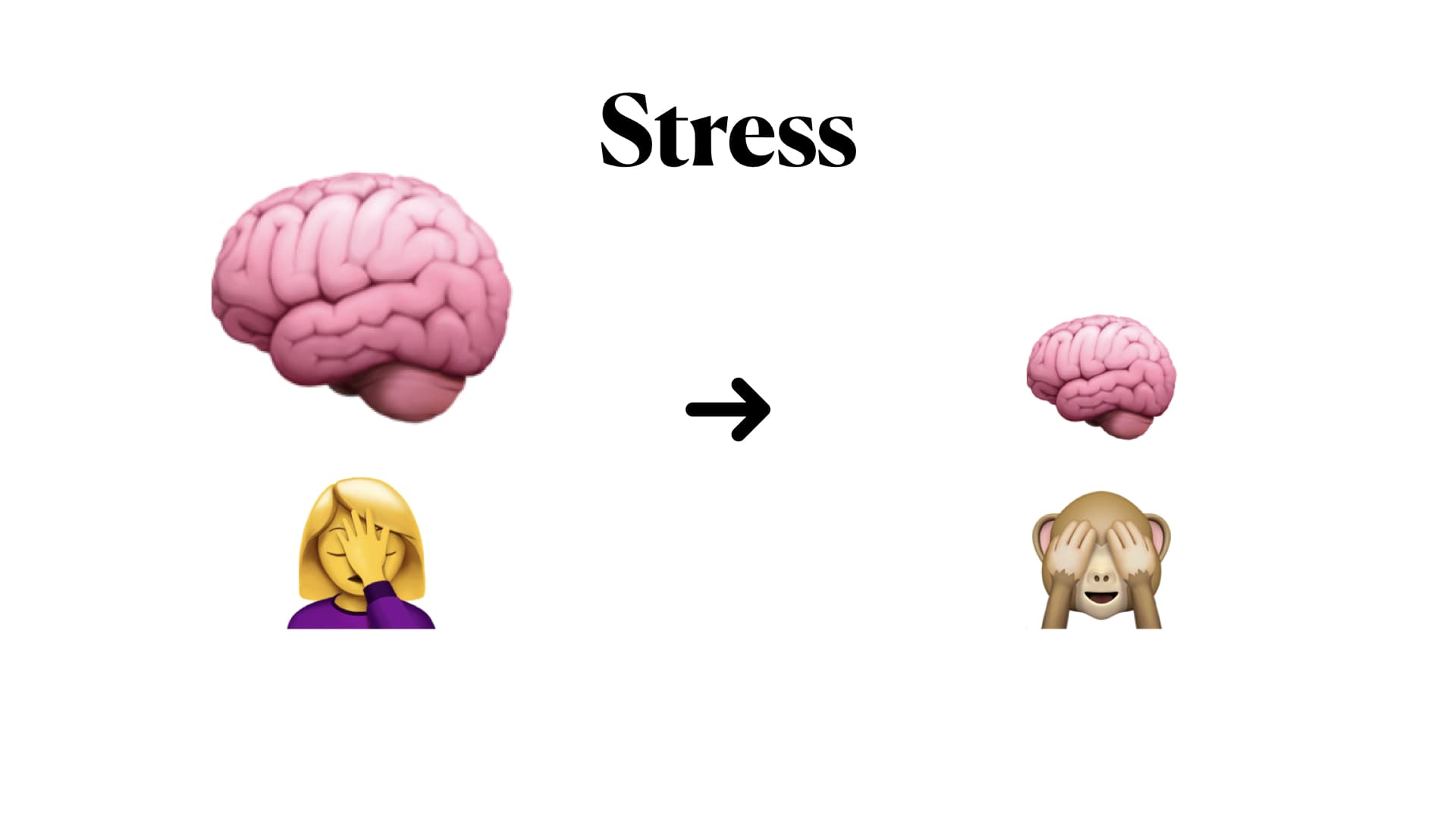
When you’re stressed, your body releases cortisol, the ‘stress hormone.’ In small doses it does useful work: it regulates blood pressure, keeps blood sugar steady and reduces inflammation. It’s the body’s way of gearing up to face a challenge. Cortisol rises in the morning to wake you up and get you out of bed.
But here’s the catch. When stress becomes constant, cortisol stays high. This reshapes your brain, and not in a good way. The areas that shrink are the ones you need most: the hippocampus — your brain’s librarian, overseeing memory and learning — and the prefrontal cortex, the conductor of thoughts, emotions, and actions.
For the vast majority of beasts on this planet, stress is about a short-term crisis, after which it’s either over with or you’re over with.
In rat experiments, the same stress that withers the hippocampus makes the amygdala, the threat detector, grow. A stressed brain loses memory and builds up anxiety. It’s a vicious circle.
Chronic stress doesn’t just play havoc with your emotions. It makes learning, remembering and decision-making harder. Without those, all that’s left is reacting to everything. And when you stop making conscious decisions, the mind weakens like a muscle without exercise. The brain physically changes.
Basically you devolve back into a monkey. That’s why easing the existential fear and accepting what is going on is the most effective way of getting rid of stress. It’s a necessity for our well-being and brainpower.
The good news is that it can be undone. In people with too much cortisol, the hippocampus grew back by up to ten percent once their levels returned to normal. And in stressed people, eight weeks of meditation added gray matter to the hippocampus and took it away from the amygdala.
There’s a faster way too. At Stanford, researchers compared five minutes of breathing exercises a day with five minutes of meditation. After a month, mood improved the most in people doing the cyclic sigh: two inhales through the nose, one right after the other, then a long exhale through the mouth. The heart slows down on the exhale, and the longer the exhale, the more the body shifts into rest.
Before a dive, freedivers breathe slowly, with the exhale longer than the inhale. After Deep Week and my instructor exam, something in my head moved up a level. The dive itself and the depth don’t bother me anymore. I can finally focus on myself and scan my body for the spots that haven’t relaxed yet.
That’s what I love about freediving: life works the same way. Life is much easier when nothing bothers you. And that’s something you can simply train.
The best picture of this machinery comes from a cartoon. And it got the main thing wrong.