
Light and darkness
When you’re in a good mood all the time, you’re like the still surface of a pond: the moment a ripple starts, you see it. When you’re in a storm all the time, there’s no telling one wave from another.
There’s a belief that you should always be worrying about something. Some cultures even glorify suffering: people feel fine when they suffer, because that’s the way it’s supposed to be. It’s a lie. Feeling good day after day is normal. Not an achievement. The norm.
You can’t be happy all the time, but you can be at peace. Once worry and fear are gone, you start to feel the joy of simply being alive. Inner joy. A calm that rises from within and doesn’t depend on circumstances or things.
A steady good mood is an indicator. A blank sheet of paper where any dark spot shows at once. Get used to feeling good. After that it runs on its own.
You wake up and something’s off, and you notice right away. Or your partner says something and a chill runs through you. That’s a signal. If you don’t catch it and clear it out, the darkness first becomes part of you, and then swallows everything.





Darkness




Without darkness, though, you couldn’t tell what light is. If we had no eyes, we’d still carry some picture of the world in our heads and probably wouldn’t even complain.
But we do see. And just as darkness lets you see the light, feeling bad lets you feel what’s good. Otherwise everything would be just meh. That’s also why you can’t be happy all the time. Happiness wears off, and after a while everything feels like nothing. Even white, if you stare at it long enough, fades to gray.
And the cycle continues.
You can’t be happy. You can be happier. Am I happier than I was fifteen years ago? No doubt.
The darkness that comes from inside has a mechanism. There’s a parasite living in the brain. It feeds on fear and suffering. It’s the part that wears you down at night, replays the worst scenarios, won’t let you sleep. Its favorite food is the imaginary. Made-up fears are so strong they stop you from acting in the real world. In a sense, they’re more real than the world itself.
The second course is doubt. Doubt always sounds reasonable. The caring voice of reason: cool down, think it through, the odds are low. You sit and listen, because it’s right. Right in one direction only: stay where you are.
The parasite’s thoughts are easy to spot: they travel from the outside in, from the feed, from other people’s voices, from old fears. Yours travel from the inside out. And there are two things the parasite can’t survive: truth and action.
Don’t forget that you’re still alive. All this darkness and emptiness around you is actually the brightest light there is. — Victor Pelevin, “Buddha’s Little Finger”
Good is real
Evil is like darkness: just the absence of light, with no power of its own. You can’t pour darkness into a room. You can only block the light.
Evil comes from weakness. People steal because they lack. They harm because they’re afraid. A source that lacks nothing and fears nothing has no use for evil. The need for it drops to zero. So good is the baseline, and the rest is shadow where the light hasn’t reached.
That said, the universe doesn’t hand out good and evil from above. And there’s no tempter to pin it all on. Good and evil are a person’s choice, and the more love you have and the cleaner your conscience, the more that choice is on you. The oldest trick in the book is passing it to someone else.
Seen this way, good is a working tool. Joy, love, gratitude: that’s how you know where to go. That’s you. The rest you can ignore. It’s also how you choose people: who to spend time with, who to let in. Even the most rational mind ends up here. Musk says his biggest mistake was weighing talent over whether someone has a good heart.
The universe works through other people. So be kinder. You’ll drift toward your own people.
Yin and yang
The old masters drew light and darkness as a single circle. Two halves of one whole, like two sides of a coin. Like day and night, which can’t be pulled apart because they belong to the same cycle.
Yin and yang complete each other and keep flowing into each other. What looks like opposites is connected. Yin is darkness, chaos and the feminine: the hidden, the intuitive, the nurturing. Yang is light, order and the masculine: the visible, the rational, the active.



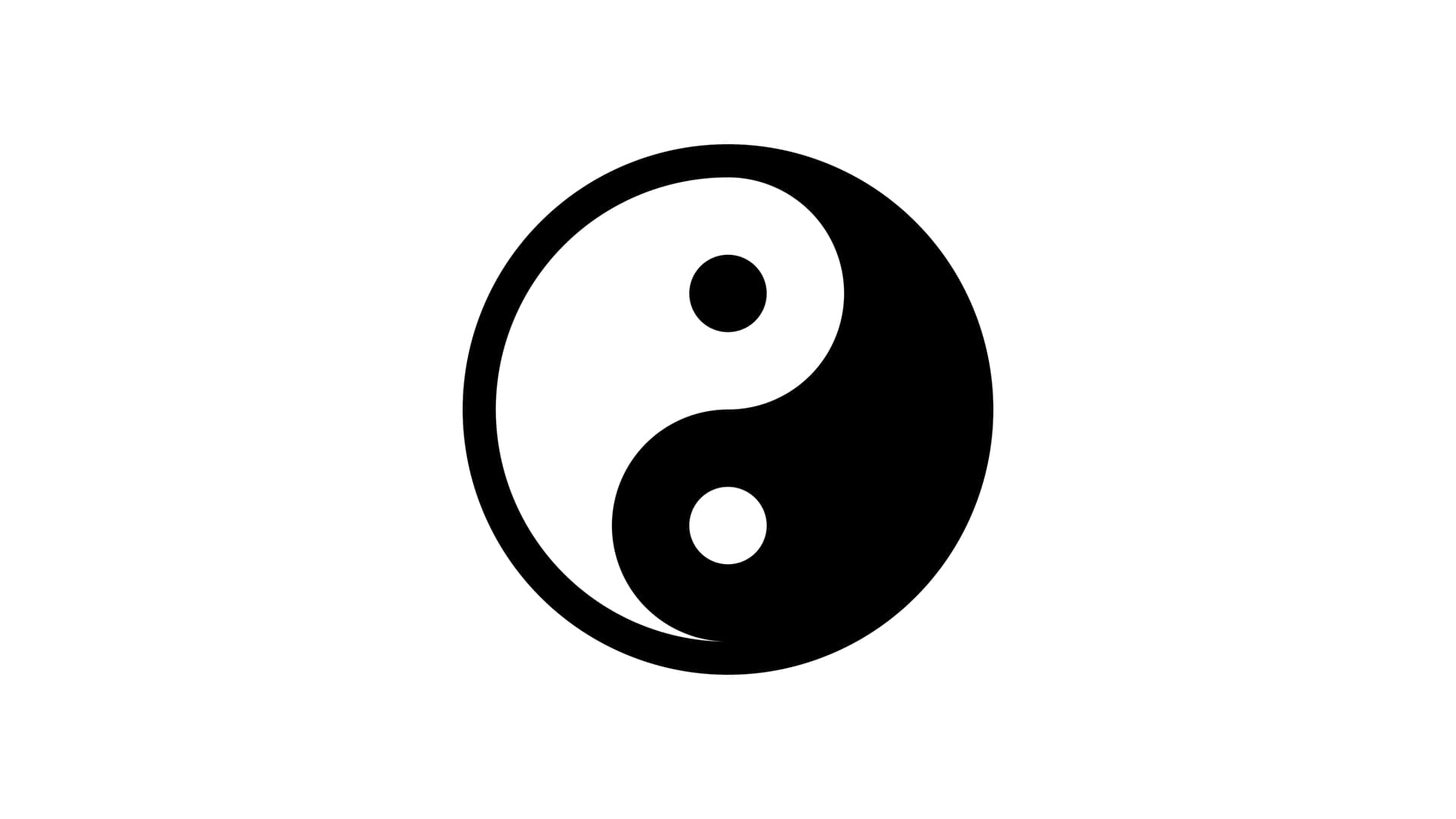
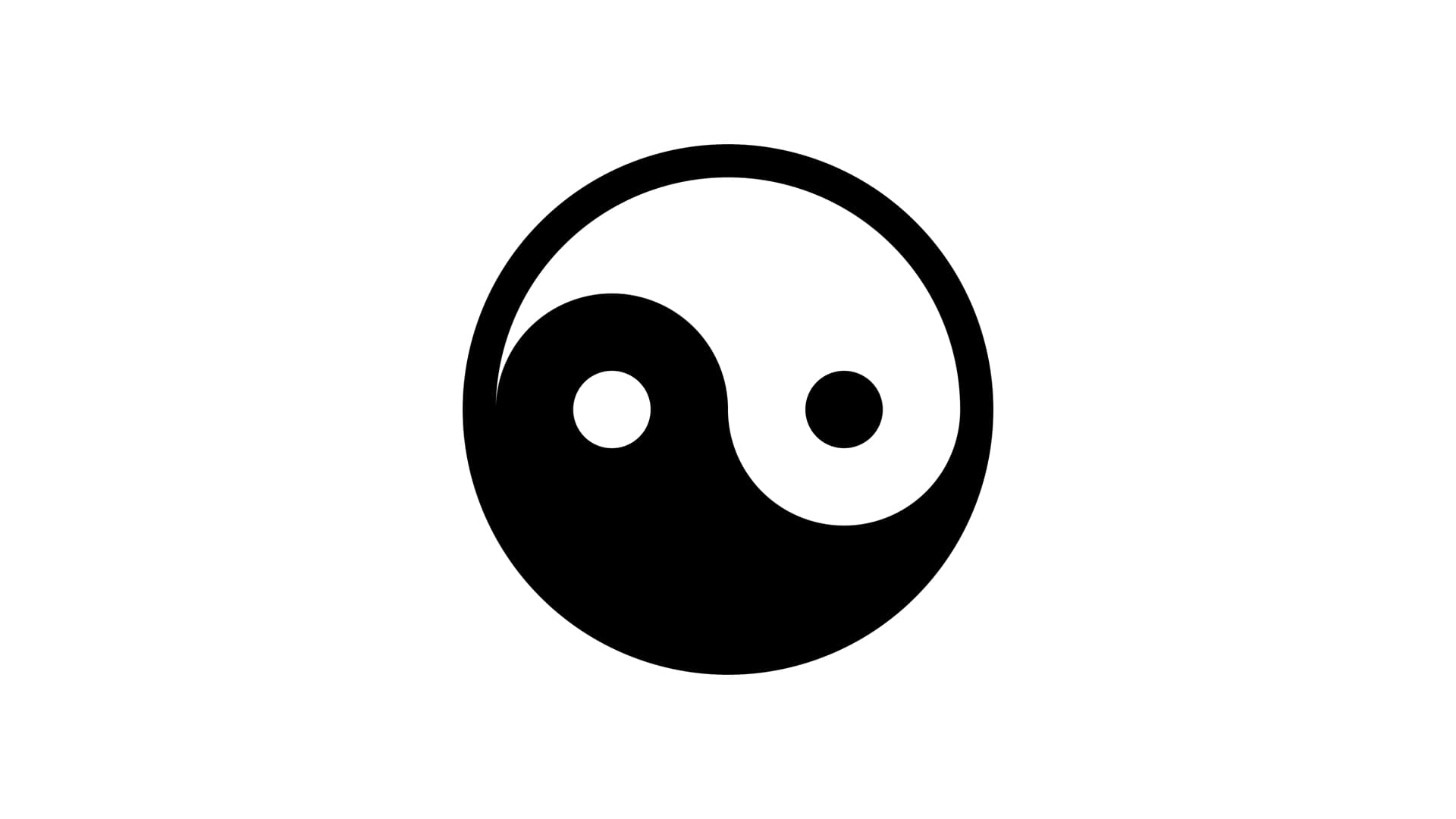
Each half holds a small dot of the other: yin carries a seed of yang, and yang a seed of yin. Nothing is ever just one thing.
And the picture doesn’t stand still. It rolls like a wave.