
What is "I"?
What makes a person a person? Just the body? If you lose an arm, are you any less you?
People who lose an arm report something strange: the arm is still there. It itches, clenches into a fist, hurts. The neurologist Ramachandran put a box with a mirror in front of them, so the healthy hand was reflected where the missing one used to be. The person unclenched their fist — and the phantom hand unclenched too, and the pain went away. The “I” is hidden somewhere in the brain.
When a person dies, the brain stays mostly intact. The neurons are still in place. But a brain scan won’t tell you whether the person knew English. Or could ride a bike. Consciousness goes dark.
“I” is the electrochemical flame that burns inside — the impulses running between neurons. They produce thoughts and emotions. Without them, the brain is just meat.
Why do we know so little about ourselves?
You can raise your hand when you choose to. But grab something hot and the body pulls it back on its own. Before you are even there, the body already exists, every system running. Only then do you start to emerge. You arrive as a passenger in a car that’s already moving. Where’s the manual?
We barely notice the body. We remember it when something goes wrong: a sore back, a rumbling stomach. A solitary cell you have inhabited since the very beginning.
The sixth sense
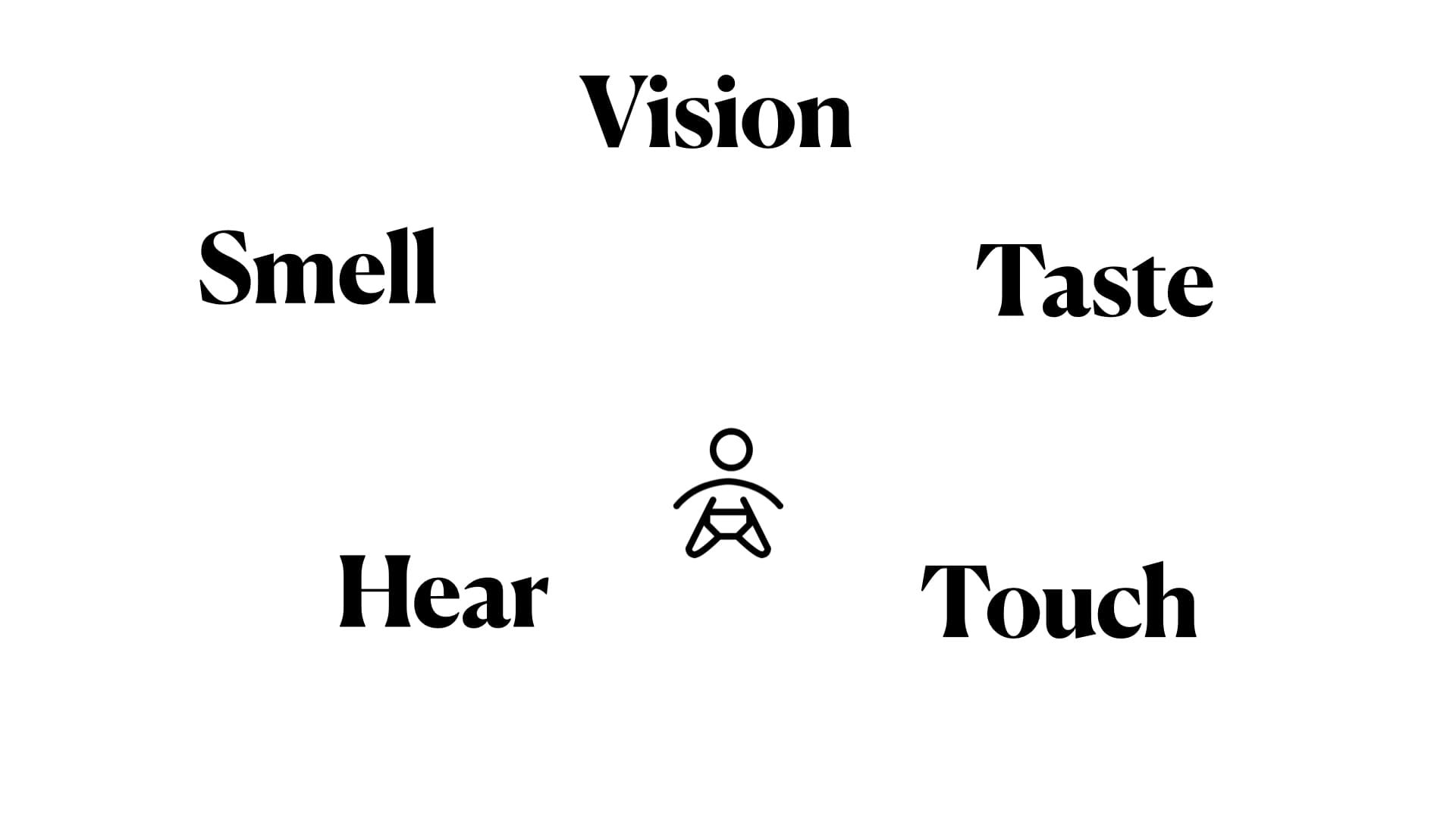
Five senses are obvious: sight, taste, touch, hearing, smell. In Buddhism there’s a sixth — the mind. It’s the screen everything gets projected onto. A sunset moves you. Music does something to you.
In Buddhism, meditation is tuning that screen.
What else do you feel?
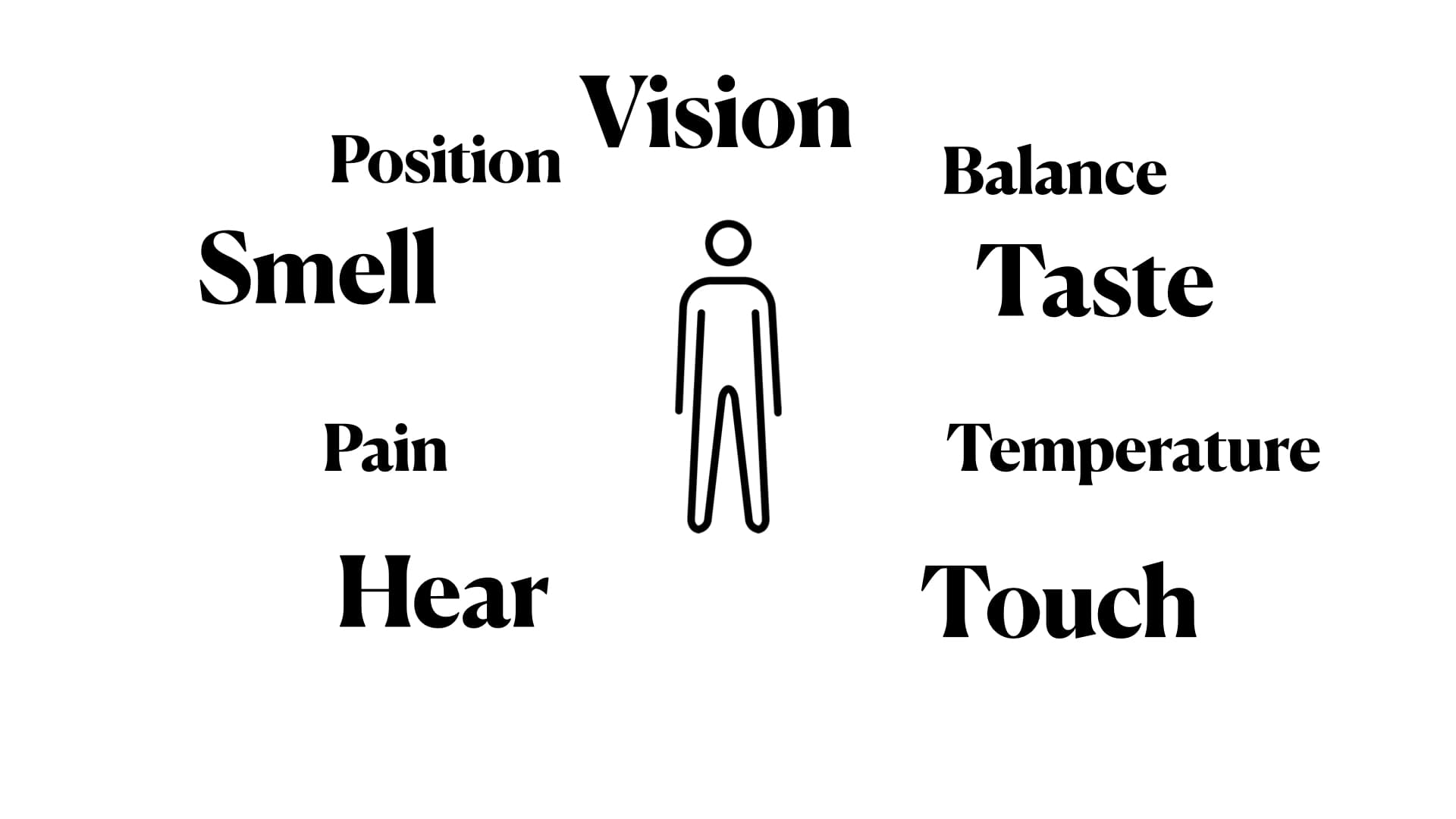
There are more than five senses. Right now your body is sending hundreds of signals. Sitting or standing? Balance. Warm or cold? Temperature. Where are your hands? Body position. Burned yourself? Pain.
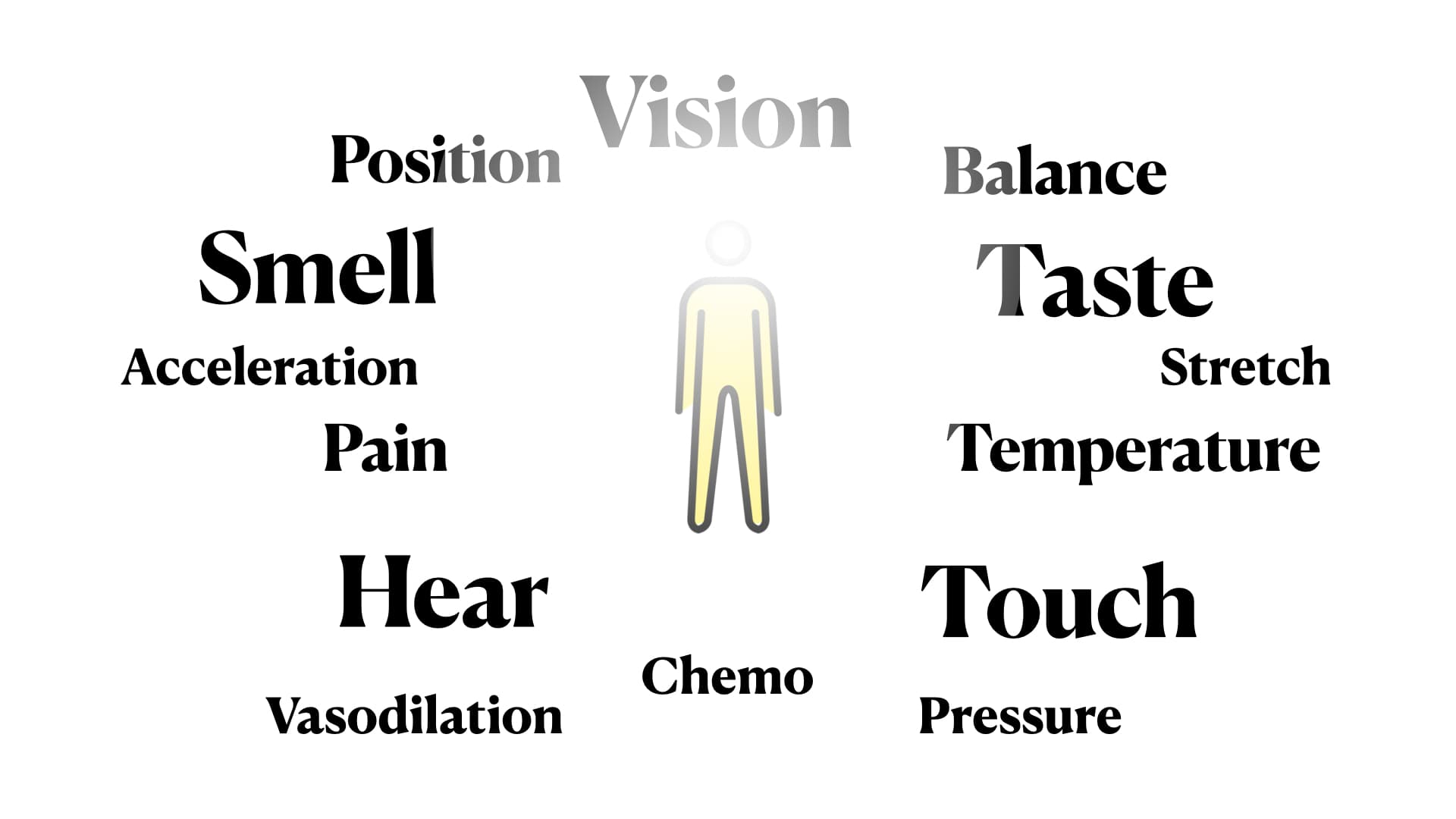
There’s also pressure, acceleration, stretch. Scientists argue over whether there are 21 senses or 53. The signals start before birth and fade into background noise. Just as a fish doesn’t notice the water, we don’t notice that we’re swimming in an ocean of sensations.
The neurologist Oliver Sacks described Christina, a 27-year-old programmer. One day she stopped feeling her body from the inside. Her sight, hearing, and sense of touch all worked, but she couldn’t tell where her arms and legs were. She could only stand while looking at her feet. The moment she looked away, her hands drifted off.
Our sense of self is woven from body sensations. Before we could speak, we felt the warmth of hands, the taste of milk, the cold air. Sensations come before thoughts. We are blind wise men in our bodies, trying to make sense of an elephant in a dark room. Is it a wall, a rope, a tree, a pillar? We feel our way through life the same way — from inside our bodies.
Listen to your body. Can you feel your heartbeat? The weight of your body?