
Unlearn
In late nineteenth-century Japan there lived a Zen master named Nan-in, who had a gift for explaining hard things with simple ones. One day a learned man came to him and asked about the nature of the mind and the path to enlightenment.
The master smiled, motioned for him to sit, and began to pour tea. The cup filled, and he kept pouring. Tea ran over the rim, onto the table and the floor.
“Master, the cup is full!” the visitor burst out. “It won’t hold any more!”
The master looked up calmly.
“Like this cup, you are full of your own opinions. How can I show you anything new until you empty it?”
Deconditioning
Our minds are Nan-in’s cup, full to the brim with opinions, ideas and beliefs picked up along the way. While it’s full, nothing new goes in. First we have to unlearn some of what we were taught to believe: let go of the preconceptions and the hardened ideas, and look at everything with a beginner’s eyes.
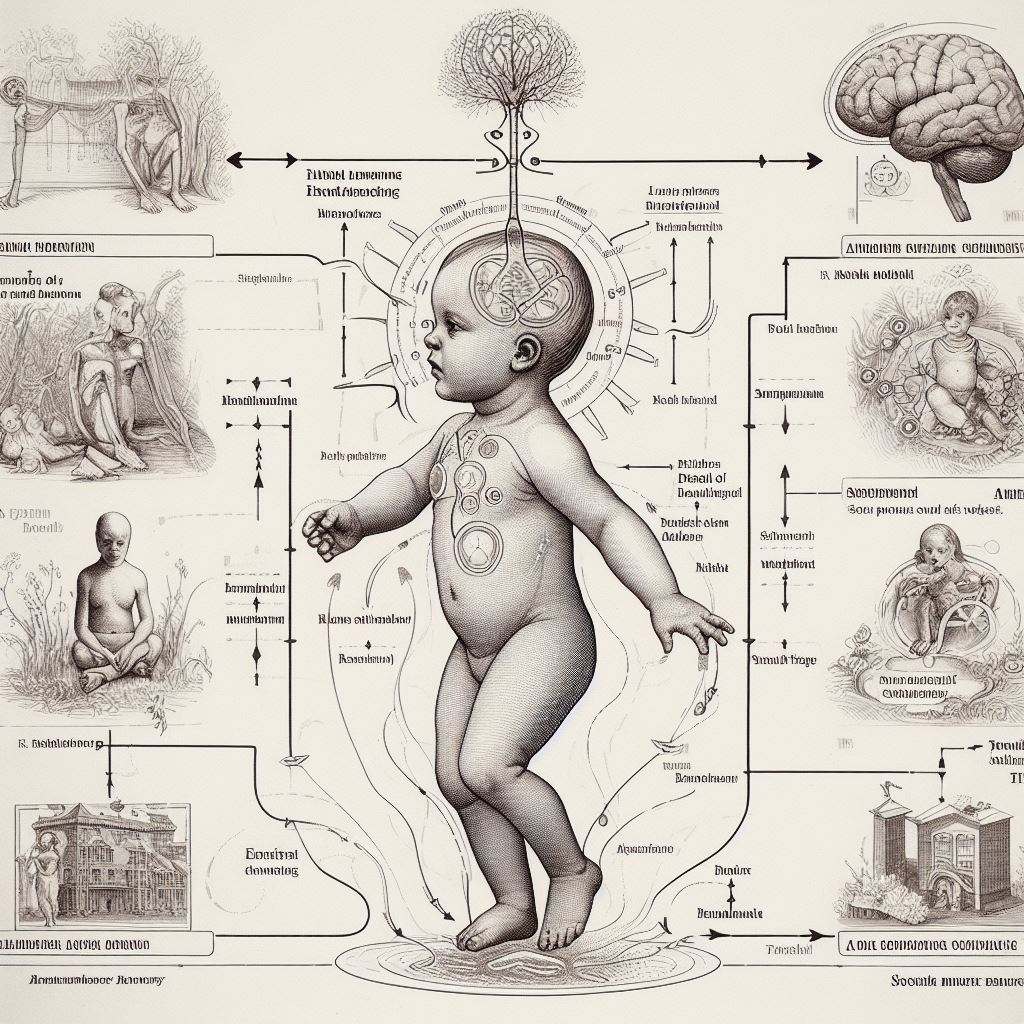
We are not our body
No one knows what their soul looks like; there’s no way to look at yourself from the inside. The body is like a suit you can’t take off, as in Pacific Rim, where the pilot is wired into the giant robot. It’s a temporary home, and the soul rents it for as long as it’s given.
We are not ourselves
Being human means soaking up the culture of other humans. We learn, adapt and take in the norms around us, and the mind keeps building a model of the world out of all of it.
No one becomes human alone. Children raised by wolves who later come back and live as people exist only in stories. The real ones never learned to speak. A person develops in stages, and each stage has its window: miss it, and walking or talking never comes. The body is a hundred percent human, and still no human ever grew out of it.
Being human means constantly becoming. Just not becoming yourself.
We absorb everything from other people
From the first minutes of life, a child’s brain pulls in everything around it like a vacuum cleaner. The child simply watches people, listens to them, and starts to talk.
A newborn’s mind is an empty cup. We imitate, and along with the rituals we pick up the biases, the norms and the stories. In the end we grow to resemble the people around us.




The dot in the middle is the same size in both pictures; only the company changes. Put it among giants, and it thinks of itself as tiny. Same dot, different circles.
Their myths define your roles
Cultures run on stories. The hero on a quest, the damsel in distress, the wise mentor: these archetypes set the frame we see ourselves in.
The danger is simple. Let other people’s stories decide who you are, and you become a character in someone else’s script.
Think about the stories you were handed down. Do they fit you, or are they borrowed clothes? Not every storyteller lives the life they describe.
Don’t let others decide who you are. Watch what you let into your head and where it came from. Drop the stories that hold you back, and write your own.
Their vocabulary describes your world
We can’t see what has no name. The words you think in draw the borders of your thoughts, letting some things in and keeping others out.
Words are more than labels. Culture and beliefs are packed inside them. A rich vocabulary plugs you into the shared web of knowledge; a poor one locks you in a narrow corner of it.
The words you use become the world you live in. So choose them with care, and listen to the words the people around you use to describe life.
Their beliefs become your religion
By one account, the word “religion” comes from the Latin religare, “to bind”. In that sense religion is simply the set of beliefs that holds you together, and it needs neither a church nor a god.
The funny part is that whatever you’re used to believing, you’ll find proof of it. Every small thing that catches your eye goes into the pile that supports what you already believe.
Superstitions are funnier still: you can’t disprove them, because there’s no logic in them. A black cat brings bad luck, unless it’s your own cat. In Chinese, the number four sounds like “death”, so buildings skip the fourth floor, the way Western ones skip the thirteenth. In Russia, whistling indoors whistles your money away. Broken mirrors, spilled salt, walking under a ladder: all bad luck.
Growing up, we copy these rituals and knock on wood to keep the evil spirits away. Little by little the rituals become what we believe in, our religion. And underneath it lies the same old fear of the unknown.
Your mind makes it real.
It is not real
The mind is full of cognitive biases, mental shortcuts that lead to absurd conclusions. Once they helped us survive. Now they keep us from seeing life as it is.
Time to unlearn. Beliefs grow in your head like a tree, and the tree needs pruning. Start with the branches that hold you back and whisper in your ear. Most of them grew out of imagination; they were never real. Letting go is hard: you’ve lived with them all your life, and they won’t leave on their own. All it takes is to stop believing them. Without belief they dry up, like a plant nobody waters.
Dark thoughts are as hardy as cacti: they hold their water a long time and won’t wither overnight. And you are the one watering them, with your attention. Stop feeding and watering what you don’t need, and it soon dries up. How do you tell what you don’t need? By the way it feels. If a thought feels bad, don’t think it.
Reprogram yourself
You can reprogram yourself, and changing a single belief is enough. Here’s how it works.
Everything is either a new configuration of the world or a question you can answer.
The heat in Thailand is simply a fact. I want to live here, and I’m hot. So it’s a question, and the answers are air conditioning, a cooler house, a home higher up in the hills. The problem never existed.
Problems belong to people who grow them. A problem is what you worry about while you refuse to accept reality.
I answered my question. And since I reprogrammed myself, I’ll tell you how it went. I’ll start with myself.
The Reading List
The Book
On the Taboo Against Knowning Who You Are
What, then, would be The Book which fathers might slip to their sons and mothers to their daughters, without ever admitting it openly?