
Mindfulness
Once I was out walking the dog in the yard. It was quiet, and my train of thought just stopped — I was simply “here.” Then the thinking came back, as it does. But I saw where the door was.
Spontaneous moments of clarity like this come fairly often, if you pay attention to them. That isn’t easy: they drown in the bustle of everyday life.
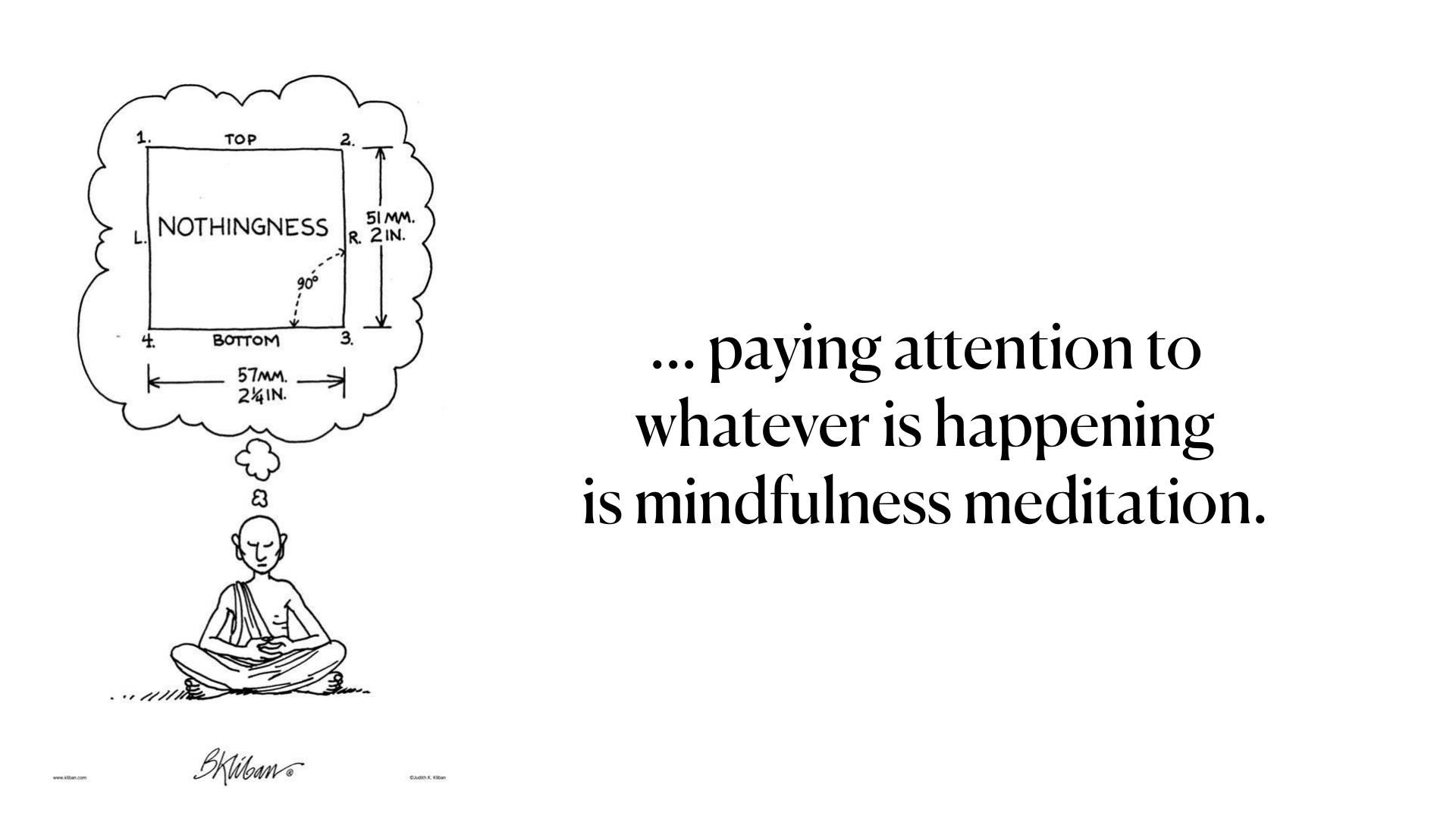
… paying attention to whatever is happening is mindfulness meditation.
Sit. Watch. Notice when the mind wanders off. Come back. That “coming back” is the entire exercise. Do it enough and you stop being dragged around by every thought that floats by. You catch the moment the mind reaches for nonsense and starts blowing it up. And in that moment you can say: “Ah, it’s you. I see you.”
When something heavier comes up, there’s a four-step technique for it, RAIN, named for the first letters of the steps. Recognize what’s here. Accept that it’s here. Investigate where it sits in the body. Nonattachment — let it pass without becoming it.
Meditation is a passage from conceptual reality into the real one. That’s why meditation holds on to the breath — it’s a handle on now.
What we call our thoughts is mostly random noise. You have to think about something. That’s what Zen is about: when you walk, walk; when you think, think.
You can’t fail at this. You start, you keep going — and soon your results are better than most people’s. Because most people never even start. Or they start and quit right away. We overestimate the average. It looks higher than it is.
The goal of meditation is to not react. The goal of enlightenment is permanent presence. Don’t forget that you’re breathing.
Think of meditation as fasting for the soul.