
Myths
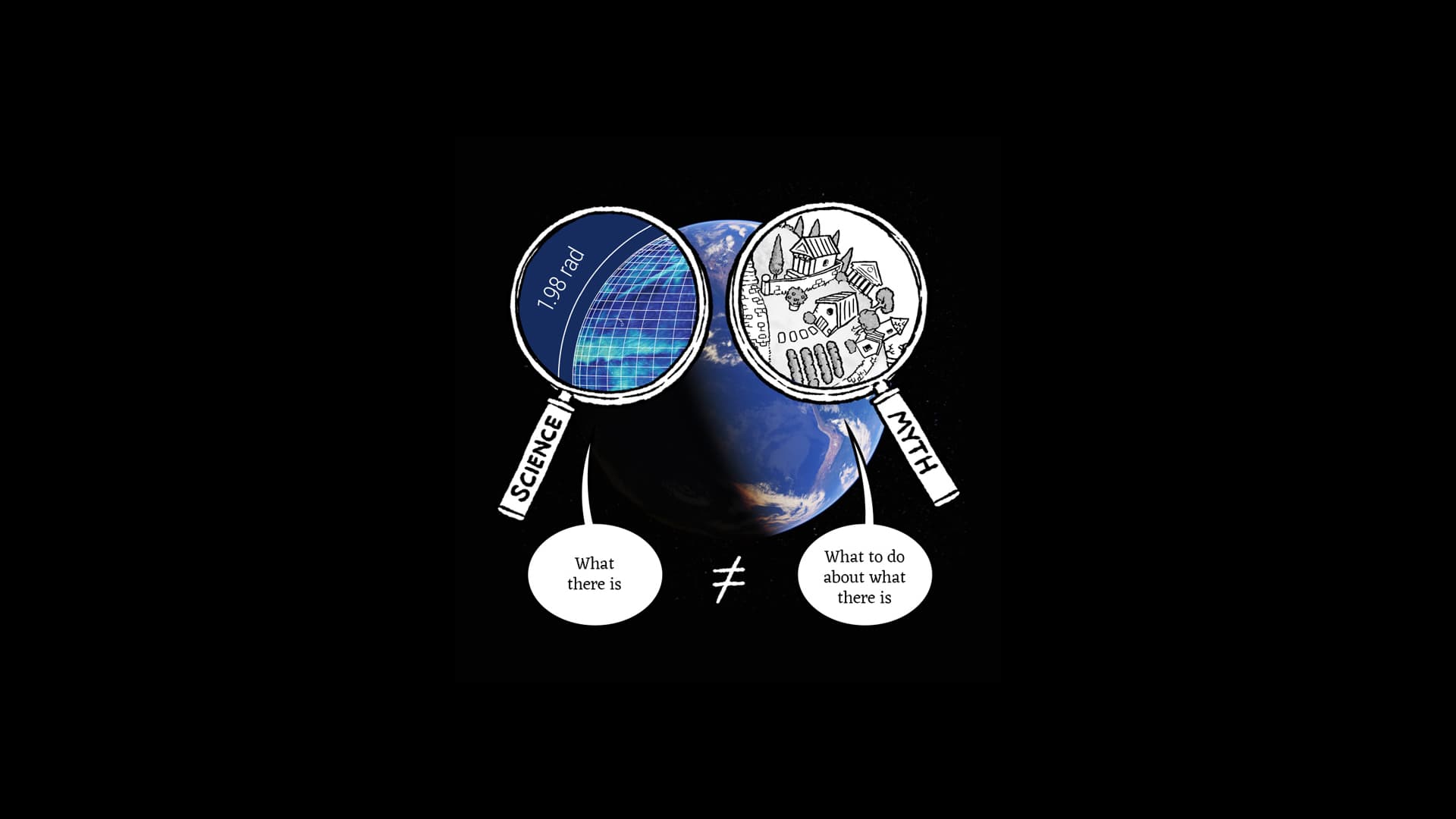
What do you believe is going on in your life right now? What myth are you telling yourself about it? What are you doing? Are you winning?
Science studies the tangible world: what you can touch, see and measure. In the Middle Ages, Christian thinkers studied nature to understand God’s design. They believed that uncovering the basic elements of creation meant peering into the mind of God. That’s where modern science took root.
But that’s only the world of things. The backdrop. The action takes place in our heads. We get only a shard of reality, and we fill in the rest with stories, personal myths that make sense of life as we go.
These stories aren’t fiction. They’re our reading of reality. They unfold in an imagined space that mirrors the world around us. Reality is far bigger than we can take in, so we pack it into a map in our heads. A map of meaning.
Scientific maps chart physical territory. A map of meaning charts the inner world: purpose, morality, existence itself. This is where religion, philosophy and personal reflection come in. It’s built from your experience, your upbringing, your beliefs and the stories your culture tells. It decides how you read events and what you count as valuable. It comforts you in hard times and points you somewhere. And it steers the story you tell yourself.
Of all the stories we lay over our lives, one keeps coming back.
The hero’s journey
Since ancient times people have noticed something strange: fairy tales and myths from different peoples tell essentially the same story. The same plots, the same figures: the sage, the shadow, the trickster, the hero. As if we knew them in advance.
Jung called this an archetype, a pattern built into us from birth. Nobody teaches it. Just as everyone knows which way is “up” without being told, everyone recognizes the hero the moment he walks into a story.
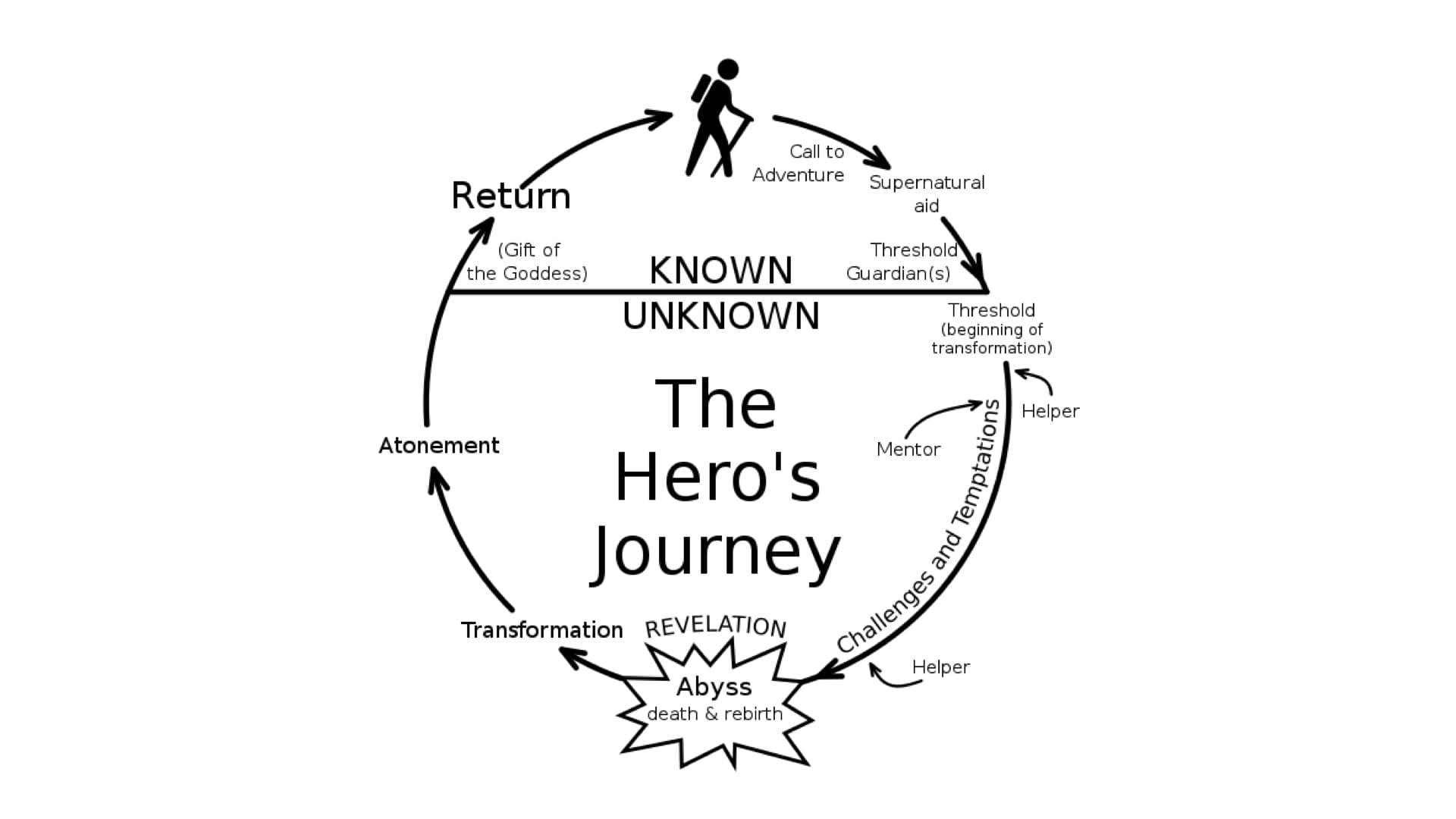
The best-known archetype is the hero’s journey, also called the monomyth. Joseph Campbell described it in The Hero with a Thousand Faces. The hero leaves ordinary life, goes through trials and comes home transformed. The journey has three parts.
Departure. A call to adventure breaks into ordinary life. The hero resists, then accepts. He crosses the threshold into a new world and meets mentors, allies and enemies.
Initiation. Trials, tests, hard ordeals. A symbolic death and rebirth. The hero gains knowledge or power. This is where the transformation happens.
Return. The hero comes back, bringing something of value to others. One last trial waits for him before everything he went through comes together into a whole.
Every structure is the same structure
There is a poster called The Complete Table of Narrative Structures: two dozen authors, each with their own scheme, all laid out on a single grid of four acts. Aristotle and Campbell, Freytag’s pyramid, Syd Field, Dan Harmon, Blake Snyder’s Save the Cat, McKee, Truby, Propp’s morphology of the folktale, Vonnegut’s curves, the Japanese kishōtenketsu, the outlines of Hitchcock, Sorkin and Wilder, even the Hippocratic method.
Everyone uses different words. The columns line up.
The same table holds Kübler-Ross and the five stages of grief: denial, anger, bargaining, depression, acceptance. Grief runs the route of a blockbuster screenplay. Vonnegut squeezed it into one line: man exists, man gets into trouble, man gets out of it better off.
The hero’s journey is one of those schemas, and it comes with a price. A hero becomes a hero by getting through hard things. So if we are the heroes, hardship turns into a required variable, and the schema goes looking for difficult roads, for suffering, for obstacles, for one more test of how much you can take.
Everything around you, everything that happens, everything you see gets flattened into archetypes and schemas in your head on the spot. The schemas load automatically, out of prior experience. The good part: you can change them.
So where does this journey take place? Through body, mind and soul.