
It's all the same
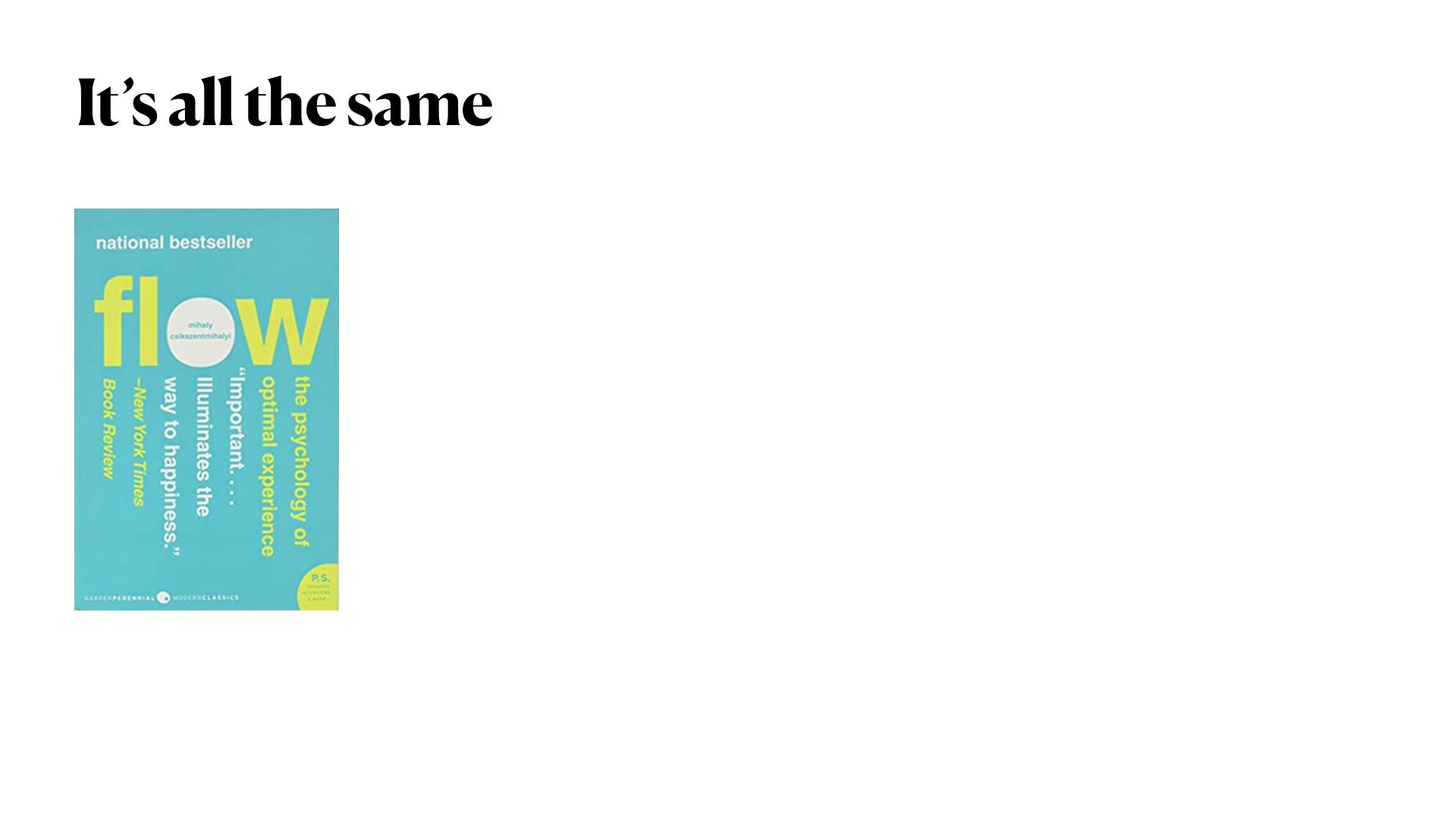
Once you clear the noise, you start to see it: all the books, all the philosophies — they’re all about the same thing.
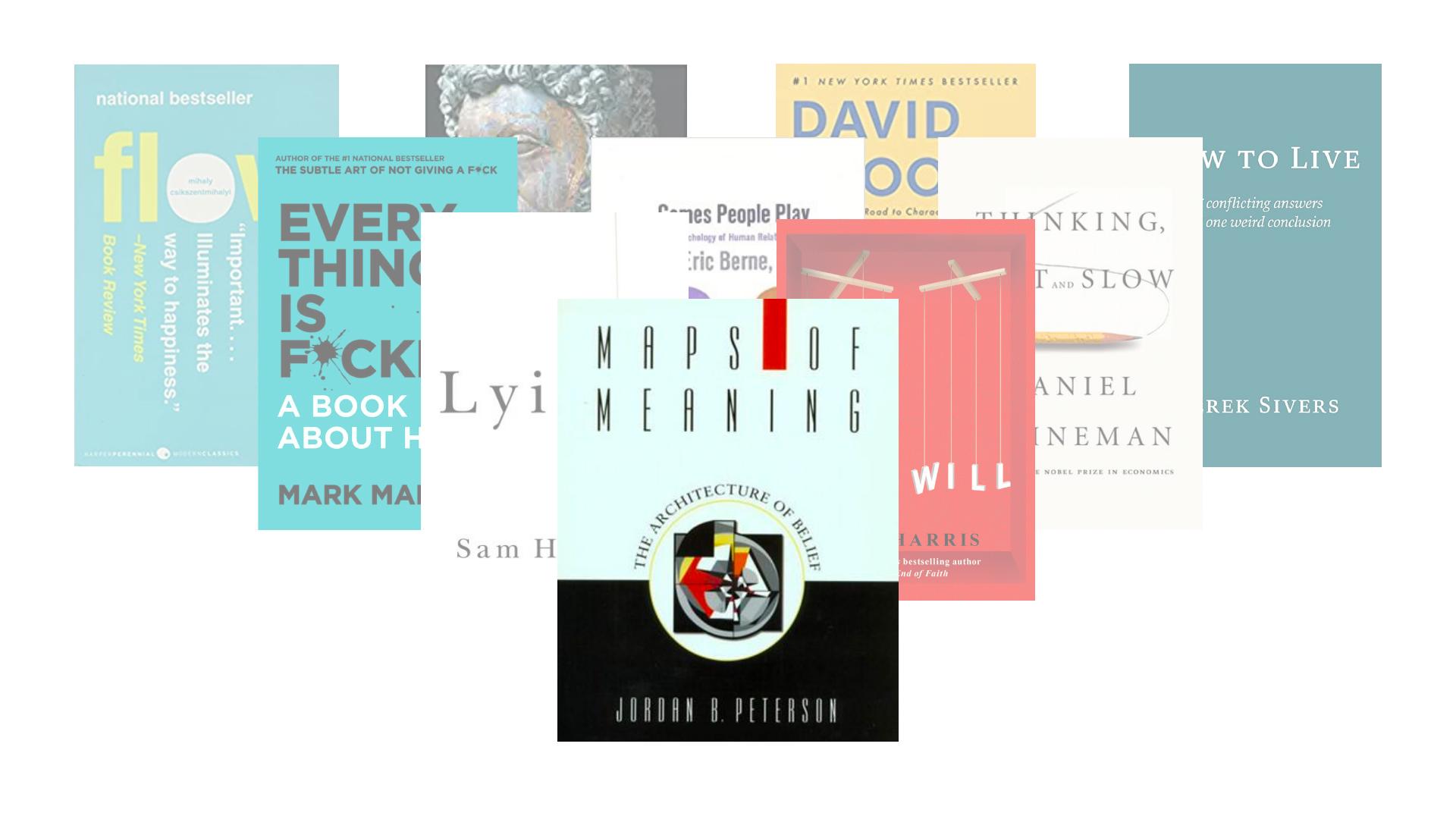
Flow. Marcus Aurelius. The Second Mountain. Everything Is F*cked. Games People Play. Thinking Fast and Slow. Free Will. Maps of Meaning. Pile them up and they all point in one direction.
All religions and traditions recognize the same thing: our perception of reality is shaped by our own thoughts and beliefs, and the world as we perceive it may not be the ultimate truth. Read this slowly, one line at a time:
- Flow — Nirvana
- Stoicism — the Eightfold path
- The Second Mountain — intentional living
- How to Live — Zen and Daoist koans
- Karma — is not decided; karma means doing
Even Stoicism is Buddhism — just with overcoming bolted on. The Stoics tell you to grit your teeth, master yourself, rid yourself of the negative through willpower. Buddhism cuts the overcoming out.
Buddhism just says it straight: it’s all inside you. Sit and watch. See what’s tormenting you, and let it go.
Because you don’t have to overcome anything. There’s nothing to fight. Just stop dragging the weight of the past around with you. Put the suitcase down. It was never yours to carry up the mountain — only to climb.
The Reading List
Flow
The Psychology of Optimal Experience
The best moments of our lives come not from passive comfort but from being fully absorbed in a challenge that stretches us — flow. Happiness isn’t found by chasing it; it’s the byproduct of total engagement in what we’re doing.
Meditations
The Private Notebook of a Roman Emperor
You don’t control what happens — only how you meet it. The obstacle is the way, the present is all you ever hold, and a good life is simply the steady practice of reason, justice, and acceptance.
The Second Mountain
The Quest for a Moral Life
Happiness is good, but joy is better. The first mountain is about building the self; the second is about giving it away — and the deeper, more selfless life you commit to there is where lasting joy lives.
How to Live
27 conflicting answers and one weird conclusion
Twenty-seven directives for how to live, each chapter arguing the opposite of the last — all true, all incompatible. The weird conclusion: there’s no single right way, so pick a stance fully and live it.
Games People Play
The Psychology of Human Relationships
Much of what passes for relationship is a set of repeating, ulterior transactions with a hidden payoff — games we run on autopilot. See the game, and you get the choice to stop playing and meet people for real.
Thinking, Fast and Slow
How two systems of thought shape every judgment we make
The mind runs on two systems — a fast, intuitive one that jumps to conclusions, and a slow, deliberate one that does the hard work. Most of our errors come from trusting the fast one when we should slow down.
Free Will
Why the Author of Your Thoughts Is Not You
Free will is not just an illusion but a conceptually incoherent idea — your thoughts and actions arise from causes you neither chose nor control. Seeing this clearly doesn’t make you fatalistic; it makes you more compassionate, more honest, and paradoxically more free.
Maps of Meaning
The Architecture of Belief
The myths and stories every culture tells aren’t naive science — they’re maps of how to act in a world we can never fully know. Meaning lives on the line between order and chaos, and the way through is to face what you most want to avoid.
Lying
Why Honesty Is the Shortcut to a Simpler Life
Lying — even the small, kind, socially convenient kind — quietly complicates your life and weakens your relationships. Commit to telling the truth, and the people and problems that matter rise to the surface on their own.